 San Pedro Sula Mayan Ruins
Things to Do in San Pedro Sula and the Day Trips Around It
If you are searching for things to do in San Pedro Sula, treat the city as a base rather than a destination. The museum, cathedral and market fill a morning or an afternoon, and the real rewards sit a few hours out of the valley. This page lists the sights worth seeing inside the city, then compares the day trips: the Maya ruins at Copán, the cloud forest of Cusuco, the fortress at Omoa, the beaches at Tela and the waterfalls near Lake Yojoa. Prices, hours and distances here come from published sources, and every guided option links to a card you can compare. If Copán is the reason you are flying through, start with our San Pedro Sula Mayan ruins day trips comparison instead.
Quick answer City sights and day trips
San Pedro Sula itself has a short list of 3 city sights: the anthropology museum, the cathedral beside Parque Central, and the Guamilito market. Its real draw for travellers is the day trips. Copán, Honduras's UNESCO Maya site, is about 3 hours away by road. Pulhapanzak waterfall and Lake Yojoa are closer, and one guided day covers both.
Key takeaways
- Half a day is enough for the city sights: museum, cathedral, park and market.
- A full spare day suits the Copán ruins, the country's headline Maya site.
- Nature lovers should look at Lake Yojoa and the Pulhapanzak falls instead of ruins.
- Read is San Pedro Sula safe before planning independent movement around the city.
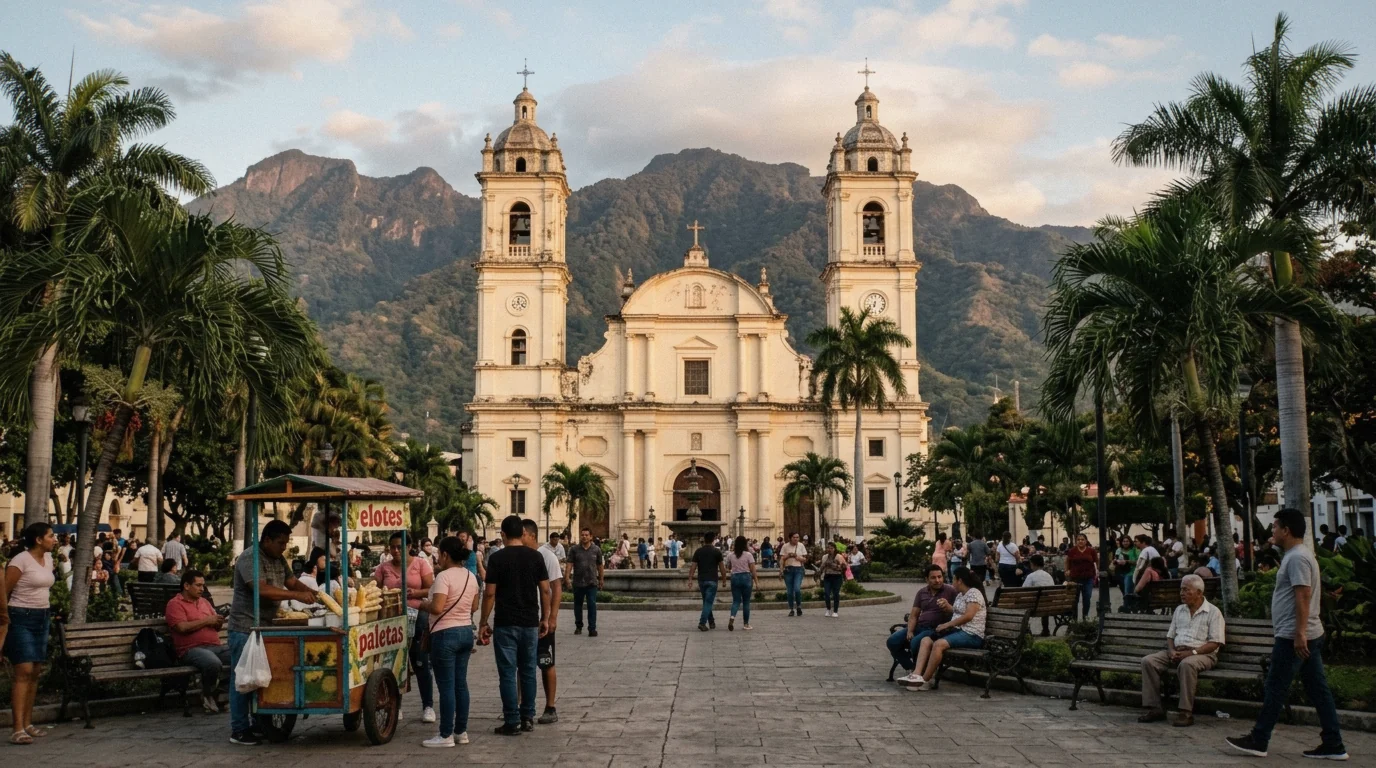
The cathedral on Parque Central.
Things to Do in San Pedro Sula City
The city rewards half a day, not a week. Four places cover most of it.
Museo de Antropología e Historia
The Museo de Antropología e Historia de San Pedro Sula is the city's main cultural sight and a good warm-up for Copán. It sits in Barrio Guamilito on 3 Avenida between 3 y 4 Calle N.O., about 3 blocks north of Parque Central, facing Banco de Occidente.
Reported hours are 9am to 4pm Monday to Saturday, with a shorter Sunday morning of 9am to noon, though the published listing is internally contradictory (it also claims the museum closes Tuesdays). No official hours page was confirmed in our research, so check current opening times before you go.
Fees are listed as L 125 (about $5) for foreign visitors, L 50 (about $1.96) for Honduran and Central American residents, L 30 (about $1.20) for students with ID, and L 15 (about $0.59) for seniors and children aged 5-6. These come from a secondary travel guide, not the museum itself, so treat them as indicative. Payment is cash only, in dollars or lempiras.
| Category | Listed fee |
|---|---|
| Foreign visitor | L 125 (about $5) |
| Honduran / Central American resident | L 50 (about $1.96) |
| Student with valid ID | L 30 (about $1.20) |
| Seniors and children aged 5-6 | L 15 (about $0.59) |
Cathedral and Parque Central
Parque Central, officially Parque Central General Luis Alonso Barahona, is the city's main square, and the Catedral Metropolitana San Pedro Apóstol faces straight onto it. The cathedral is dedicated to San Pedro Apóstol, the city's patron saint.
The building took a long time to finish. Designed by the Costa Rican architect José Francisco Zalazar, construction ran from 1949 to 1970, and the finished church was handed to the diocese on September 27, 1970. Its status has since grown: on January 26, 2023, Pope Francis created the Ecclesiastical Province of San Pedro Sula, raising the diocese to a metropolitan archdiocese and making this cathedral its seat.
There is no admission fee to look at the square or step inside. Expect the square to be busy in daytime and quiet at night. Neither the square nor the church needs more than 30 to 60 minutes of your time, which is why they pair naturally with the museum and market on the same loop.
Mercado Guamilito
Mercado Guamilito is the best place in the city to buy crafts. It was established in the early 1960s in one of San Pedro Sula's oldest neighbourhoods, between 8th and 9th Avenida and 6th and 7th Calles NO, close to the museum and a short walk from the centre.
The stalls sell Central American handicrafts in wood, clay and natural textiles, so it is the obvious stop for gifts before flying home. Listed hours are daily from 10am to 5pm, per a secondary travel listing rather than an official municipal source.
Because the market sits in Barrio Guamilito, you can combine it with the anthropology museum in one outing. A note on getting around: the UK FCDO advises visitors to avoid walking around San Pedro Sula and other main Honduran cities, and to use radio-dispatched or hotel-arranged taxis for shorter distances. It also names the eastern neighbourhoods of Chamalecón, Cofradía and Rivera Hernandez as places to avoid. We cover this in detail in is San Pedro Sula safe, and it is worth reading before you decide how to reach the market.
El Merendón: The Coca-Cola Trail
For exercise rather than culture, locals head up El Merendón, the mountain range on the west side of the Sula Valley. The best-known route is the Coca-Cola Trail, named for a large lit Coca-Cola sign that overlooks the city. It is a roughly 6.9 km (4.3 mile) in-and-out hike, though the trail platform also tracks a longer variant of about 5.6 miles with around 536 m of elevation gain, so figures differ by route and trailhead.
The trail ends at a viewpoint over San Pedro Sula. It is described as well-maintained and popular with runners, hikers and mountain bikers, and it is busy enough that people commonly hike it alone without a guide. There is even a coconut stand reported near the trailhead.
The trade-off is access. The FCDO advises against road travel at night in Honduras, so start early and be off the mountain before dark, and arrange a trusted or hotel taxi rather than a hailed one.
Sources: Honduras.com, Wikipedia), AllTrails, UK FCDO
Day Trips from San Pedro Sula
This is the reason most travellers pass through the city. The table compares the realistic day trips, using distance figures from published travel sources and guided options from the tours listed on this site.
Comparing the Day Trips
The distances below come from secondary travel sources, and where sources disagree we give a range rather than one figure. Guided options are shown only where a tour listed on this site covers that trip. For anything marked 'No listing compared here', you would need to arrange transport independently or ask a local operator, and we have no tour to point you to.
The most-booked choice by far is Copán, which is why San Pedro Sula Mayan ruins tours get their own comparison table on the homepage.
| Day trip | Distance | Guided option |
|---|---|---|
| Copán ruins and Copán Ruinas town | not stated as a precise km figure, about 3 hours by road, per the tour listings | Six hours at the site, $295 · Full 14-hour day, $295 |
| Pulhapanzak waterfall and Lake Yojoa | Lake Yojoa about 84-96 km, sources differ, Pulhapanzak roughly 70-110 km depending on route, with the falls about 17 km north of the lake | Lake Yojoa, Pulhapanzak and Taulabe caves day, $225 |
| Cusuco National Park | about 45 km, roughly 1 hour 45 minutes' drive on mountain roads | No listing compared here |
| Omoa fortress and coast | about 45 km, about 1 hour by direct bus | No listing compared here |
| Tela beaches | about 67 km straight-line, roughly 87-97 km by road, sources differ | No listing compared here |
| El Merendón (Coca-Cola Trail) | on the edge of the city, west side of the Sula Valley | No listing compared here |
How the Copán Day Trips Differ
Both guided Copán options cost $295 and include hotel pickup and the ruins entrance fee, which is $20 per foreign visitor at the park itself. The difference is time. The six-hour version gives you about 6 hours at the archaeological site, room for the Sculpture Museum and the tunnels if you want them.
The 14-hour version leaves at 06:00 from 21 hotels and gives roughly 4 hours at the site, with the museum, tunnels and a local guide as paid extras. Compare them fully in the Copán day trip comparison or read the dedicated pages for the six-hour day and the full 14-hour day.
The Lake Yojoa and Pulhapanzak Alternative
If ruins are not your thing, the Lake Yojoa day is the strongest guided nature option from the city. It runs about 10 hours for $225 and covers two hours at Pulhapanzak waterfall, three hours of kayaking on Lake Yojoa and a visit to the Taulabe caves, with hotel pickup from 12 San Pedro Sula hotels and bottled water included. The zipline ($30) and the walk behind the falls ($20) are paid extras, and meals are not included.
The full details are on the Lake Yojoa and Pulhapanzak day trip page.
Cusuco National Park
Close, cool and wild, Cusuco is the quickest escape from the valley heat.
Cloud Forest an Hour and Three-Quarters Away
Cusuco National Park protects a roughly 23,400-hectare stretch of cloud forest in the Merendón mountain range, and it is only about 45 km from San Pedro Sula. The drive still takes around 1 hour 45 minutes, because the last stretch climbs unpaved mountain roads. The gap between the short distance and the long drive is the terrain, not a data error.
The park is known for high biodiversity, including the resplendent quetzal, tapirs and rare amphibians. The main visitor entrance is reached through the Primavera neighbourhood approach.
No tour on this site covers Cusuco, so you would need to arrange a driver or a local operator yourself. The foreign-visitor entrance fee was reported at about $10 per person, with lower resident fees cited around L 50 per adult. No official fee schedule from the Honduran conservation institute was confirmed in our research, so treat those figures as approximate and expect to pay in cash. Given the unpaved access roads, many visitors combine a Cusuco attempt with an overnight rather than a single day.
Sources: Wikivoyage, TripAdvisor
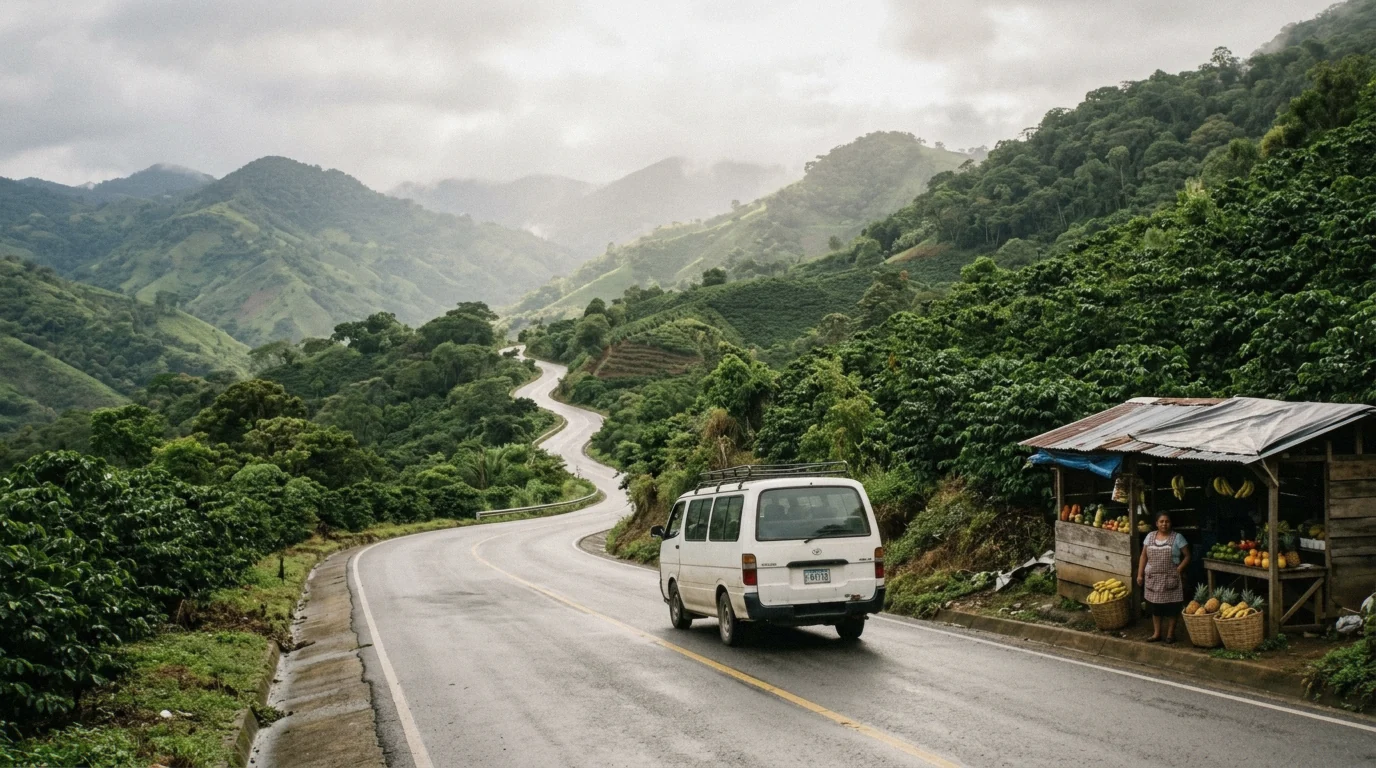
Most of the best days start on this road.
Omoa Fortress and the Coast
A Spanish colonial fortress on the Caribbean, reachable by a one-hour bus ride.
Fortaleza de San Fernando de Omoa
The Fortaleza de San Fernando de Omoa stands in the coastal town of Omoa, about 45 km from San Pedro Sula, with a direct bus taking about 1 hour. From Omoa's main square it is roughly a 15-20 minute walk southwest to the fortress.
The fortress was built of brick and coral between 1759 and 1777 under orders from the Spanish crown. It is reported to be in good condition today and has a visitor centre and museum on site. Entrance is reported at about $4 per person, with an optional guide available for extra cost. As with several fees on this page, no official heritage-institute price list was confirmed in our research, so treat the figure as approximate.
No tour on this site covers Omoa. It suits travellers who want history without a long drive, and who are comfortable using public transport, though note the FCDO's warnings about poorly maintained and recklessly driven public buses in Honduras. A radio-dispatched or hotel taxi is the advised alternative for shorter distances.
Sources: Honduras Travel
San Pedro Sula in Brief
A quick factual profile of the city, compiled from published reference sources.
Founding, Size and Climate
San Pedro Sula was founded on June 27, 1536 by the Spanish conquistador Pedro de Alvarado, as Villa de Señor San Pedro de Puerto Caballos, beside the existing indigenous settlement of Choloma, with 35 Spanish citizens. Today it is Honduras's second city by population and its main industrial and commercial hub. Its airport carries much of the country's banana, coffee and textile export freight, which tells you what the surrounding Sula Valley produces.
The elevation figures differ across sources, with roughly 60-80 m above sea level the safest way to state it. The climate is tropical savanna bordering tropical monsoon, with a dry season from April through May and a wet season the remaining ten months, and relatively high temperatures year-round. Pack for heat and plan outdoor activities for the morning.
| Fact | Figure |
|---|---|
| Founded | June 27, 1536, by Pedro de Alvarado |
| City population | 834,883 (projected, 2023) |
| Metropolitan area population | 1,445,598 (2023) |
| Elevation | about 60-80 m above sea level, sources differ |
| Climate | tropical savanna, dry April-May, wet rest of year |
| Rank in Honduras | second city after the capital |
Sources: Wikipedia
How to Spend a Spare Day
If You want Maya history before or after your flight
Book the Copán day trip with six hours at the site, $295, which includes hotel pickup and the ruins entrance fee.
If You would rather have waterfalls, a lake and caves
Take the Lake Yojoa, Pulhapanzak and Taulabe caves day, $225, about 10 hours door to door with kayaking included.
If You only have half a day in the city
Do the museum, the cathedral at Parque Central and Mercado Guamilito on foot or by hotel taxi, then read is San Pedro Sula safe before extending the loop.
San Pedro Sula: Questions
What is San Pedro Sula known for?
It is Honduras's main industrial and commercial hub, the capital of Cortés Department in the Sula Valley, and the country's second city after Tegucigalpa. For travellers it is known as the gateway airport for day trips to Copán, Lake Yojoa and Pulhapanzak.
What is the nicest city in Honduras?
This page does not rank cities, and no source in our research does. What we can say is that San Pedro Sula is the commercial second city, while the colonial highlands and the Copán Ruinas village draw most traveller affection. Judge for yourself.
What is the number one tourist attraction in Honduras?
No source publishes a ranked number one, but Copán is the country's UNESCO World Heritage Site, inscribed in 1980, and it is the headline archaeological attraction. Compare the guided Copán day trips from San Pedro Sula if that is your priority.
What are the best things to do in San Pedro Sula itself?
Within the city, the short list is the Museo de Antropología e Historia, the cathedral facing Parque Central, and Mercado Guamilito, open daily from 10am to 5pm. Add the Coca-Cola Trail on El Merendón if you want a hike. Get around by hotel or radio-dispatched taxi, as the FCDO advises against walking around the city.
How far is Copán from San Pedro Sula?
The tour listings describe about 3 hours by road each way, with a coffee stop at La Entrada on the way. No precise kilometre figure for the route appears in our source material. Both guided options are compared on the homepage tour table.
Can you do Lake Yojoa and Pulhapanzak in one day from San Pedro Sula?
Yes, on a guided day. The Lake Yojoa and Pulhapanzak day trip runs about 10 hours for $225 and covers the falls, kayaking on the lake and the Taulabe caves. Lake Yojoa is roughly 84-96 km from the city depending on the route, with Pulhapanzak about 17 km further north.