 San Pedro Sula Mayan Ruins
Mayan Ruins in Honduras: Copán and the Sites Around It
Honduras has real Mayan ruins, and one of them is world class. Copán, a UNESCO World Heritage Site in the country's far west, is the major Maya city in Honduras and the reason most travelers look for Mayan ruins in Honduras at all. The other recorded sites, El Puente and Río Amarillo, are smaller and see far fewer visitors. Lake Yojoa adds a major pre-Columbian site that is Lenca rather than Maya, which matters if you care about accuracy. This guide compares what exists, what it costs and how each site fits a trip from San Pedro Sula. If you want to see Copán without renting a car, compare the San Pedro Sula Mayan ruins tours that run there as full day trips.
Quick answer Which Maya sites exist and which one is worth the drive
Copán is the major Maya site in Honduras, inscribed by UNESCO in 1980, with a US$20 entry ticket for foreign visitors that also covers Las Sepulturas. The other known Maya sites, El Puente and Río Amarillo, are much smaller, and El Puente's reported fee is about US$10. Los Naranjos at Lake Yojoa is often listed alongside them, but it is a Lenca site, not a Maya one. For most travelers based in San Pedro Sula, Copán is the site worth the drive and the others are side trips at best.
Key takeaways
- See the full visitor guide to the Copán ruins, the only large Maya city in Honduras
- Compare the guided Copán day trips from San Pedro Sula, both priced at $295 with the entrance fee included
- The Lake Yojoa area holds Los Naranjos, a Lenca site, plus waterfalls and caves
- Start with our honest guide to San Pedro Sula safety before planning a day trip
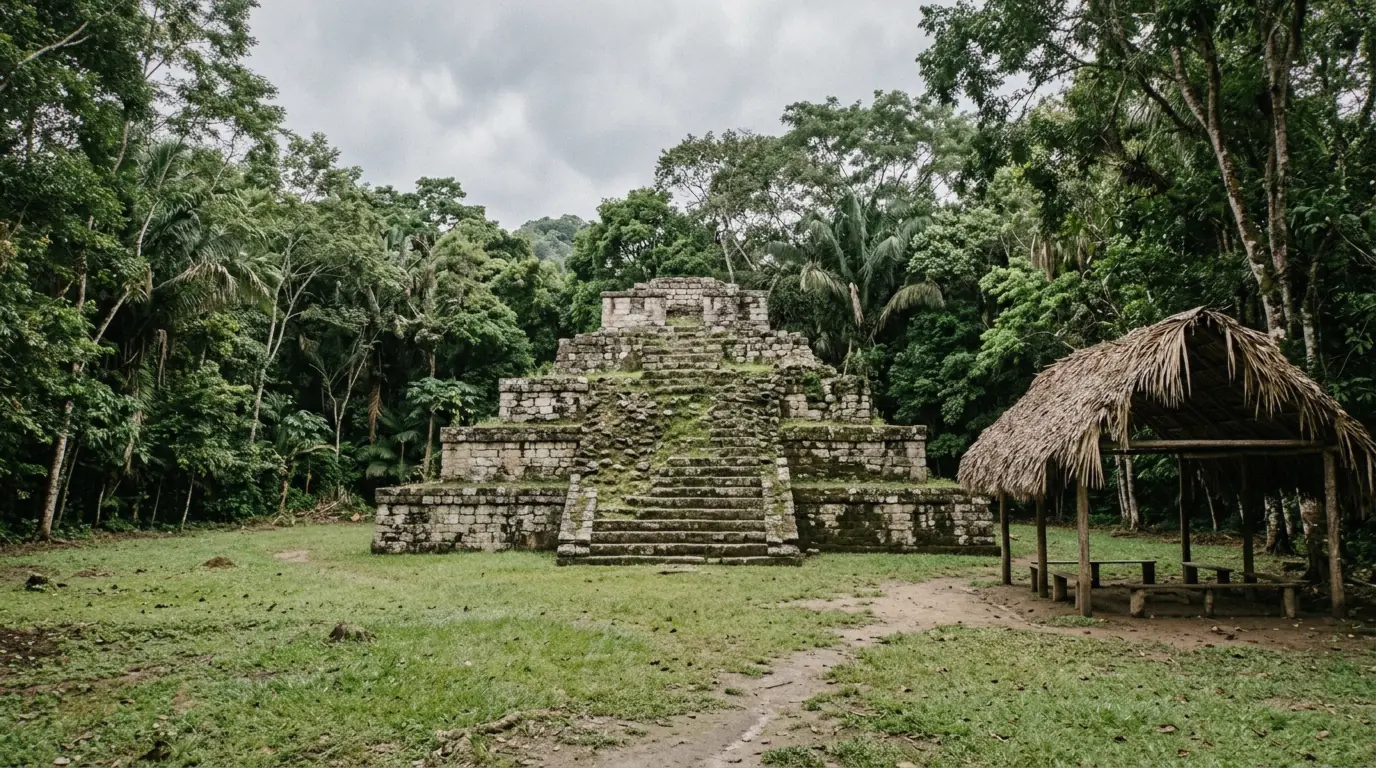
El Puente, the smaller site in Copán department.
Maya and Pre-Columbian Sites in Honduras Compared
Honduras records several pre-Columbian sites, but they are not equal in size, access or certainty. This table pulls the figures from the sources listed in each section below.
What the Sources Agree On
Copán is the only site in Honduras with major tourist infrastructure, a UNESCO listing and an official published fee schedule. El Puente is described as the second-largest known Maya site in the country, though almost everything published about it comes from secondary sources. Río Amarillo is recorded but access information is thin.
Los Naranjos belongs in any honest list only with the caveat that it is Lenca. The figures below come from the official Copán ticketing page, Wikipedia and local operator pages, and the fee column mixes official and reported numbers, which is flagged.
| Site | Culture | Where | Visitor access |
|---|---|---|---|
| Copán | Maya | Copan department, near the Guatemala border | Open daily 8:00 AM to 4:00 PM, US$20 foreign entry, tunnels US$15 extra, museum US$10 |
| El Puente | Maya | La Jigua, about 11 km north of La Entrada (sources differ on the reference point) | Reported fee about US$10 (L 248), reported hours 8:00 AM to 4:00 PM, single tour-operator source |
| Río Amarillo | Maya | Santa Rita municipality, about 20 km northeast of Copán | No confirmed fee, hours or independent visitor access found |
| Los Naranjos | Lenca, not Maya | North shore of Lake Yojoa | Eco-archaeological park with museum and trails, no confirmed current fee or hours |
| Cuyamel Caves | Preclassic, Olmec-linked ceramics, not Maya | Colón department, northeast Honduras | No visitor infrastructure or organized access found |
Why the Fee Column Is Uneven
Only Copán has an official published tariff. The Copán park ticket is US$20 for visitors from outside Central America and US$10 for Central Americans, and that price is listed on the official IHAH ticketing page. El Puente's roughly US$10 fee appears on one local tour operator page and was never confirmed against a government source, so treat it as indicative.
For Río Amarillo, Los Naranjos and the Cuyamel Caves, no official fee page was found at all. That pattern tells you something useful: Copán is the site set up for visitors, and everything else requires planning and tolerance for uncertainty.
Sources: Sitio Maya de Copán, Wikipedia: El Puente), Wikipedia: Río Amarillo)
Copán: The One Worth the Trip
Copán is the flagship Maya site of Honduras and one of the most studied cities of the entire Maya world.
Why Copán Matters
A Maya royal dynasty was founded at Copán in AD 426 by a warrior who took the name K'inich Yax K'uk' Mo', and his line ruled for four centuries across sixteen kings. At its Late Classic peak the kingdom held at least 20,000 people. The city was abandoned as a political center in the early 10th century, long before the Spanish arrived.
UNESCO inscribed the Valley of Copán as a World Heritage Site in 1980. If you are asking whether there were Mayans in Honduras, Copán is the answer, and a detailed one at that.
| Feature | What you see | Detail from the sources |
|---|---|---|
| Hieroglyphic Stairway | 62 steps, 10 meters wide | Roughly 2,200 glyphs per Wikipedia, though other sources count from 1,250 to over 1,800, so sources differ |
| Altar Q | 16 kings carved around its sides | Dedicated in AD 776, text on top dates the dynasty's founding to AD 426-427 |
| Ballcourt | 16 mosaic macaw sculptures once flanked it | Completed 6 January 738 and dedicated to a macaw deity |
| Rosalila Temple | Full-size replica in the Sculpture Museum | Dedicatory step deciphered as AD 571, found intact under Temple 16 |
| Las Sepulturas | About 50 buildings around 7 courtyards by AD 800 | Included in the same US$20 ticket as the main park |
Costs and Hours
The main park and Las Sepulturas cost US$20 for foreign visitors from outside Central America on one combined ticket. Central Americans pay US$10, and Honduran nationals pay L 100 with reduced rates. The tunnels under the Acropolis cost US$15 extra, though sources disagree on whether that covers one tunnel or both.
The Museum of Maya Sculpture costs US$10 and the Regional Museum of Archaeology in town costs US$5. The park opens daily from 8:00 AM to 4:00 PM, though some blogs report 5:00 PM, so confirm on arrival. Most visitors need 2-3 hours for the core, or half a day with a tunnel and museum.
- Read the full breakdown on our Copán ruins guide
- The six-hour option is tour 1, $295 with the entrance fee included and about six hours at the site
- The full-day option is tour 2, $295, 14 hours door to door with about four hours at the ruins
Visiting Copán from San Pedro Sula
Two guided day trips run from San Pedro Sula to Copán, both priced at $295 and both including the ruins entrance fee. Tour 1 gives about six hours at the site with a coffee stop at La Entrada on the way, hotel pickup and free cancellation up to 24 hours before the start. Tour 2 is a 14-hour day with pickup at 06:00 from 21 San Pedro Sula hotels and about four hours at the ruins, with the museum, tunnels and a local guide as optional extras. The town of Copán Ruinas sits 1.6 km from the ruins, about 14 km from the El Florido border crossing with Guatemala. To weigh the two options, compare the Copán day trips side by side.
Sources: Sitio Maya de Copán, IHAH, Wikipedia: Copán
El Puente
El Puente is the second-largest known Maya site in Honduras, and almost nobody visits it.
What El Puente Is
El Puente sits in the town and valley of La Jigua in the Copan department, reported as about 11 km north of the town of La Entrada. Sources measure that distance from different reference points, with one describing it as about 8 miles outside La Entrada and others as about 6 km off the Copán Ruinas road, so treat the distance as approximate. The site core holds more than 200 structures, including tombs, religious buildings and residences, but fewer than 10 have been excavated and restored.
The visible core has 5 plazas. The main pyramid, Structure 1, stands 12 meters (39 ft) tall with six tiers and stairways on all four sides.
- Opened to the public on 20 January 1994 with a visitor centre and site museum
- More than 200 structures, fewer than 10 restored
- Structure 1 pyramid is 12 meters (39 ft) tall
Practical Access to El Puente
Here is the honest part. The only published fee is about US$10 (L 248) and the only published hours are 8:00 AM to 4:00 PM daily, and both figures come from a single local tour operator page, not an official IHAH fee schedule. No official fee page for El Puente was found, so treat that price as indicative rather than settled.
For scale, Copán's official foreign ticket is US$20, which tells you how much larger and better developed Copán is. El Puente suits travelers already driving the La Entrada to Copán Ruinas road who want a quiet half stop, not anyone building a trip around it. No guided day trip from San Pedro Sula in our comparison stops here.
Sources: Wikipedia: El Puente), Trifinio Tours
Río Amarillo
Río Amarillo is a recorded Maya site northeast of Copán with real archaeological interest and almost no published visitor information.
What Is Known About Río Amarillo
The site lies about 20 km northeast of the Copán ruins, in the municipality of Santa Rita in the Copan department, near the Río Amarillo aerodrome. It contains 53 structures arranged around squares, patios and terraces, including elite residences, pyramid complexes and plazas built with high-quality stone. Excavations have recorded approximately 145 burials, some with stucco masks that still preserve their original pigment.
That is a genuinely significant archaeological record for a site this obscure.
- 53 structures around squares, patios and terraces
- About 145 burials recorded in excavations
- Some stucco masks retain original pigment
Can You Visit Río Amarillo?
No confirmed information was found on whether Río Amarillo is currently open to independent visitors or whether it requires a guide or permit. No fee was found and no opening hours were found either. We will not invent a price or pretend access is straightforward.
If you are set on seeing it, the realistic route is to ask locally in Copán Ruinas, about 20 km away, and accept that the answer may be no. For almost every reader, Copán itself and possibly El Puente will cover the Maya interest of the region.
Sources: Wikipedia: Río Amarillo)
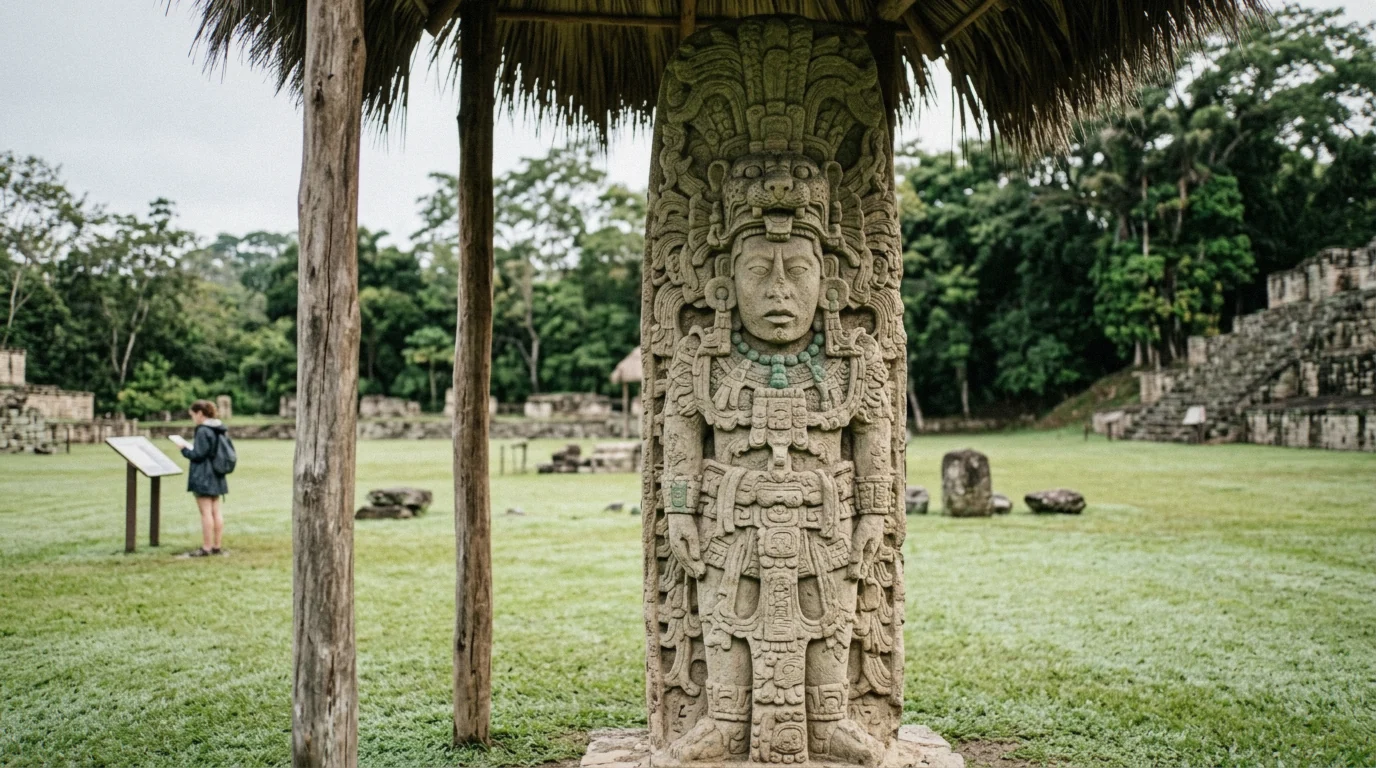
Copán, the major Maya site in Honduras.
Los Naranjos at Lake Yojoa: Not a Maya Site
Los Naranjos appears on many Honduras ruins lists, but calling it Maya would be wrong.
A Lenca Site on the Maya Frontier
Los Naranjos, on the north shore of Lake Yojoa, is associated with the Lenca culture rather than the Maya directly. Its importance lies in what it reveals about the Maya frontier and contact between different ancient peoples in the region, not in Maya architecture. The site was occupied across four phases spanning roughly 800 BC to AD 1250, from the Jaral phase through Eden, Yojoa and Río Blanco.
The park protects seven large earthen mounds, up to 20 meters high, remnants of a once-thriving commercial settlement. The name comes from the orange coloring found on excavated pottery.
- Occupied roughly 800 BC to AD 1250 across four phases
- Seven earthen mounds, up to 20 meters high
- Lenca culture, important for Maya frontier studies
Visiting Los Naranjos Today
The Los Naranjos Eco-Archaeological Park combines the ruins with protected marshland, a small museum and elevated wooden trail platforms through tropical forest. No official current fee or posted hours could be confirmed from an authoritative source, so we publish no number. The lake area itself is an easy day from San Pedro Sula, about 50.9 miles or roughly 1 hour 10 minutes by car to the lake shore, with the town of Santa Cruz de Yojoa farther out at about 72 miles.
The watershed shelters nearly 400 documented bird species according to Ramsar. Our Lake Yojoa guide covers the area in full, and the Lake Yojoa and Pulhapanzak day trip, $225, covers the waterfall, kayaking and the Taulabe caves rather than the archaeology.
Sources: Wikipedia: Los Naranjos, Ramsar
Cuyamel Caves and Why Roatán Has No Maya Ruins
Two questions come up often enough to answer directly, one about caves in the northeast and one about the Bay Islands.
The Cuyamel Caves
The Cuyamel Caves are a group of limestone caverns, including Matilde's Cave, Cuyamel Cave and Portillo Cave, in the hills above the village of Cuyamel in the Colón department of northeast Honduras, far from the Copán and San Pedro Sula region. They matter archaeologically for Preclassic-period ceramics with stylistic links to more northern Mesoamerican cultures, including the Olmec, and they were explored by the Harvard archaeologist Paul Healy. They are not a Maya site.
No visitor infrastructure, entrance fee or organized tourist access was found in the sources used, so they appear to be a research location rather than a practical day trip.
- Three named caverns in Colón department
- Preclassic ceramics with Olmec stylistic links
- Explored by Paul Healy of Harvard's Peabody Museum
Does Roatán Have Mayan Ruins?
No Maya site on Roatán appears in the sources, and no Maya ruins are documented there in the material we reviewed. Roatán is a Caribbean island whose pre-Columbian and colonial history is separate from the Maya lowlands of western Honduras. If you see a tour advertising Maya ruins on the Bay Islands, treat it with caution.
The real Maya experience in Honduras is inland, at Copán above all, and it pairs naturally with things to do in San Pedro Sula if you are flying through the city.
Watch Before You Go
A third-party video, embedded from YouTube. We have no relationship with its creator.
Mayan Ruins in Honduras: Questions
Were there Mayans in Honduras?
Yes. Copán was one of the great Maya cities, with a dynasty founded in AD 426 that ruled sixteen kings over four centuries and a peak population of at least 20,000. El Puente and Río Amarillo are smaller recorded Maya sites in the same region. Our Copán ruins guide covers the history in detail.
What is famous about the Copán Mayan ruins?
Copán is famous for its sculpture and writing. The Hieroglyphic Stairway carries the longest known Maya hieroglyphic text, sources count its glyphs at anywhere from 1,250 to roughly 2,200, and Altar Q carves all sixteen kings of the dynasty. UNESCO listed the valley in 1980. See how the day trips run if you want to visit from San Pedro Sula.
Is it safe to visit Copán, Honduras?
The research sources for this page cover archaeology and ticketing, not security conditions, so we cannot make a safety claim about the Copán area itself. What we can say is that both Copán day trips run with hotel pickup and drop-off in San Pedro Sula, which removes the driving. Read our San Pedro Sula safety guide for the city side of the question.
Does Roatán have Mayan ruins?
No Maya site on Roatán appears in the sources. The documented Maya sites in Honduras, Copán, El Puente and Río Amarillo, all lie in the western Copan department. Start from our homepage to see what can realistically be visited from San Pedro Sula.
How much does it cost to enter the Copán ruins?
The official ticket is US$20 for foreign visitors from outside Central America and US$10 for Central Americans, and one ticket covers the main park plus Las Sepulturas. The tunnels cost US$15 extra and the Museum of Maya Sculpture costs US$10. Both listed Copán day tours at $295 include the basic ruins entrance fee.
Is El Puente worth visiting instead of Copán?
For most travelers, no. El Puente has more than 200 structures but fewer than 10 restored, its reported fee is only about US$10 from a single unconfirmed source, and no day trip from San Pedro Sula in our comparison stops there. It suits a quiet stop on the La Entrada to Copán road. The fuller picture is in the guide to Mayan ruins in Honduras.